

Stepping into the backyard often feels less like entering a peaceful sanctuary and more like facing an unfinished chore list. Between patchy grass, scattered toys, and a cramped concrete slab that barely fits four chairs, many yards struggle to compete with indoor comfort and screens. Yet your outdoor space holds tremendous potential to expand your home’s livable footprint, give children room to burn energy safely, and create a space where adults linger.
Designing a family-friendly outdoor retreat never requires sacrificing style for durability or turning your yard into a plastic playground. The best family backyards balance rugged functionality with timeless comfort, thoughtful zoning, and smart safety features. Planning your layout intentionally—from site clearing and surfaces to greenery, boundaries, and lighting—builds an outdoor space that adapts as toddlers become teenagers and playdates evolve into neighborhood dinners.
Separate High-Energy Play Spaces From Quiet Relaxation Zones

When adults and children share an outdoor space, friction happens because active play collides with quiet relaxation. A backyard soccer match or splash in a kiddie pool quickly disrupts anyone reading or grilling nearby. Distinct activity zones solve this problem without a massive lot. Map out clear sightlines from your kitchen sink, family room window, or main patio so you can supervise younger children while giving them freedom to explore.
Working alongside experienced landscape designers helps divide an open lawn into intuitive outdoor rooms that feel cohesive. Instead of erecting harsh barriers, use subtle visual cues—such as gentle grade changes, curved garden borders, or shifts in ground texture—to signal where active play ends and the adult lounge begins.
- Establish clear sightlines: Place play equipment in direct view of indoor windows and patio seating, avoiding blind spots.
- Use natural sound buffers: Plant dense ornamental grasses, evergreen shrubs, or staggered raised planters between play zones and seating areas.
- Design convertible footprints: Frame a toddler play pad with removable stone edging in a ten-by-ten-foot square for a future pergola.
Pair Structural Elements With Kid-Friendly Greenery
An all-grass yard turns into mud during rainy weeks and dust in August, while an all-stone yard radiates summer heat and offers zero softness for tumbling toddlers. Balancing permanent structural features with resilient plant life gives your yard four-season usability. Structural walls, raised beds, and terraced steps organize sloping terrain, prevent erosion, and keep energetic feet out of flower beds.
Partnering with skilled hardscaping contractors lets you incorporate multi-purpose stonework for a busy household. A low retaining wall built to level a sloped lawn can be capped with smooth stone at eighteen inches high, doubling as casual overflow seating during family cookouts.
- Build seat-height retaining walls: Construct stone borders sixteen to twenty inches tall with rounded capstones for durable extra seating.
- Choose non-toxic plants: Avoid hazardous ornamentals like foxglove and oleander in favor of coneflowers, hostas, and culinary herbs.
- Select high-traffic turf: Overseed play lawns with tough blends like tall fescue or Kentucky bluegrass that recover quickly from heavy traffic.
Prune Deadwood and Thin Canopies for Sunlight and Safety
Before investing in patio furniture, outdoor kitchens, or playground equipment, look up. Mature trees bring shade, privacy, and character, yet neglected canopies pose serious overhead hazards during storms. Dead, cracked, or overextended branches hanging above seating areas or swing sets can snap without warning, while dense foliage blocks the sunlight needed to keep lawn grass thick underneath.
Scheduling a canopy inspection with certified tree services before construction protects your family and new backyard investments. Arborists can safely remove hazardous deadwood, elevate low-hanging limbs obstructing walking paths, and selectively thin interior branches to allow dappled sunlight and breezes through the yard.
- Remove dead branches: Eliminate brittle deadwood and rubbing limbs to reduce storm damage risks and prevent decay from spreading.
- Raise canopy clearance: Prune lower limbs to at least eight feet above walkways and lawns so adults and kids move freely.
- Thin dense crowns: Remove fifteen to twenty percent of interior foliage to let filtered sunlight reach shade-tolerant grass below.
Eliminate Tripping Hazards and Reclaim Usable Yard Space
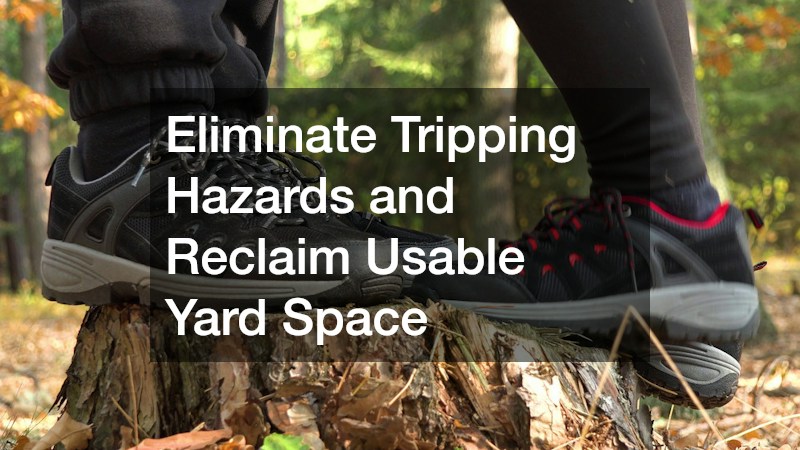
Few things ruin an afternoon faster than a stubbed toe, twisted ankle, or damaged mower blade from hidden ground hazards. Old tree stumps, protruding surface roots, and uneven drainage dips eat up valuable square footage and turn backyard games into an obstacle course. Leaving an old stump to rot takes years and attracts wood-boring pests like termites and carpenter ants near your home.
Hiring professional stump grinding services clears these obstacles below grade in hours, reclaiming flat, functional square footage for lawn games, garden beds, or seating. Unlike chemical removers that take months to work and introduce harsh compounds near play areas, mechanical grinding pulverizes wood six to twelve inches beneath the soil so you can backfill and reseed right away.
- Grind stumps below turf level: Request grinding at least eight to twelve inches deep for grass coverage, or deeper for patio footings.
- Clear wood chips first: Scoop out ground wood shavings and replace them with topsoil and compost to prevent nitrogen loss.
- Level sunken dips: Fill low pockets across the lawn with a fifty-fifty blend of topsoil and coarse sand before reseeding.
Size Your Gathering Space for Daily Meals and Weekend Hosting
The most common backyard renovation regret is building the primary gathering patio too small. On paper, a ten-by-ten-foot pad sounds generous until you place a six-person dining table in the center and realize guests cannot pull their chairs back without dropping off the edge into the grass. A functional outdoor living room needs generous circulation space so people can walk behind seated diners comfortably.
Consulting knowledgeable local patio contractors early in planning helps translate your family’s habits into accurate dimensions and code-compliant layouts. Regional pros understand local frost-line depths, soil drainage quirks, and municipal setback rules while helping you separate the cooking station from lounge seating so toddlers never brush past a sizzling grill.
- Allow chair clearance: Plan at least twelve by fourteen feet for a six-person dining table so guests have thirty-six inches behind chairs.
- Isolate the cooking zone: Dedicate a six-by-eight-foot corner for your grill and prep counter, positioned downwind from dining seating.
- Plan lounge groupings: Reserve at least ten by twelve feet for an outdoor sofa and two chairs arranged around a coffee table.
Choose Low-Maintenance Surfaces That Resist Stains and Weather
Family life outdoors is wonderfully messy. Between dripping popsicles, spilled barbecue sauce, muddy cleats, and scraped chair legs, your patio surface takes a daily beating. Natural wood decks offer warmth but require regular sanding, staining, and board replacements to prevent splinters in bare feet, while loose gravel shifts underfoot and gets kicked into mower blades.
Modern concrete paving gives families a durable, splinter-free foundation handling decades of heavy use with minimal upkeep. Today’s architectural finishes include stamped textures mimicking natural flagstone, warm integral color stains, exposed aggregate, and slip-resistant broom finishes—forming a continuous surface that eliminates weed growth between joints and cleans up with a quick hose rinse.
- Prioritize slip resistance: Specify a light broom finish or textured stamp rather than a glossy surface so wet feet stay planted.
- Apply penetrating sealer: Seal the surface every two to three years to repel grease, berry stains, and spilled drinks.
- Design slope drainage: Pitch surfaces away from your foundation at one-eighth to one-quarter inch per foot for clean runoff.
Create Dedicated Surfaces for Scooters, Chalk, and Driveway Games
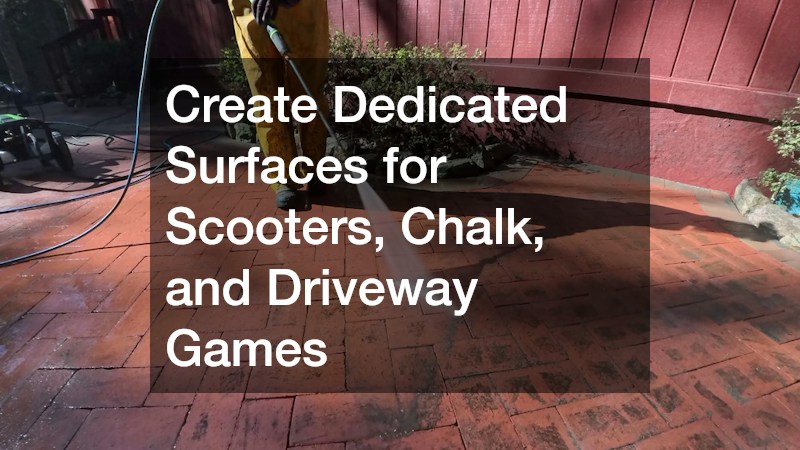
Children gravitate toward smooth, hard surfaces for riding tricycles, practicing balance bikes, drawing chalk murals, and bouncing basketballs. When your backyard consists entirely of grass and mulch, kids inevitably migrate to the front driveway—putting them near parked cars, backing vehicles, and street traffic. Bringing a dedicated hard-surface play strip into your fenced backyard keeps wheels off your dining patio and out of the driveway.
Working with an experienced paving contractor lets you integrate wide pathways and side-yard activity courts seamlessly into your landscape. A five-foot curved walkway linking your patio to a shed doubles as a scooter track, while widening a side yard into a ten-by-twenty-foot court creates space for hoops and four-square.
- Widen walkways to five feet: Standard three-foot paths feel tight, whereas five-foot paths accommodate strollers, wagons, or balance bikes comfortably.
- Use rounded edge profiles: Finish pathway borders with a smooth bullnose edge rather than sharp corners to minimize scrapes during tumbles.
- Create flush lawn transitions: Grade path edges flush with the surrounding grass so wheels roll smoothly and mowers trim cleanly.
Protect Play Equipment Zones and Retain Soil Moisture Naturally
Beneath every swing set, climbing dome, and slide lies a landing zone that quickly wears down to bare dirt. Once grass disappears from these spots, rainy days turn play areas into slick mud pits, while dry days create rock-hard surfaces offering zero cushion when a child slips off the monkey bars. Meanwhile, garden beds and young trees struggle to hold moisture during summer heat unless their root zones are insulated.
Scheduling seasonal bulk mulch services solves both problems in a single delivery, saving dozens of trips to the garden center. Spreading engineered wood fiber beneath play equipment creates a shock-absorbing safety surface, while shredded bark mulch across garden beds locks in soil moisture, regulates root temperatures, and smothers weeds.
- Install six to nine inches under playsets: Lay permeable landscape fabric beneath swing sets and slides, then fill with engineered wood fiber.
- Keep garden beds at two to three inches: Spread shredded bark mulch around perennials—deep enough to block weeds without suffocating roots.
- Protect tree trunks: Pull mulch back three to four inches from trunks in a flat donut shape rather than piling volcanoes.
Balance Sightlines, Privacy, and Safety Around the Property Line
True relaxation happens when parents do not hover nervously every time a toddler wanders near the property line or the dog spots a squirrel. A well-designed perimeter boundary defines your outdoor sanctuary, keeps children and pets safely contained, and buffers your patio from neighboring windows or busy streets without making a modest yard feel boxed in.
Consulting reputable fence contractors helps match the right boundary style, height, and hardware to each side of your property. You might install a six-foot privacy screen along the side bordering a neighbor’s driveway while transitioning to an open, four-foot decorative aluminum or spaced-picket design along the back edge overlooking a wooded creek.
- Install self-latching gates: Equip perimeter gates with spring hinges and magnetic safety latches mounted fifty-four inches high so toddlers stay inside.
- Check picket spacing: Keep gaps between vertical pickets under four inches wide—or three inches for small dogs—to prevent wedging.
- Mix privacy with open views: Use solid cedar or vinyl near seating areas for privacy, and switch to open styles where you want breezes.
Add Weatherproof Outlets and Layered Lighting for Nighttime Use

Without thoughtful power and illumination, your backyard closes for business the moment the sun sets. Extending usability into the evening hours lets your family enjoy late summer dinners, marshmallow roasts, and quiet conversations after afternoon heat fades, while illuminating steps and pathway edges so kids and guests navigate the yard safely after dark.
Hiring a licensed electrician ensures outdoor wiring, outlets, and transformers meet strict wet-location safety codes. A qualified pro can install tamper-resistant GFCI outlets inside weatherproof covers for string lights or fans, letting you layer warm ambient, task, and pathway lighting without glare.
- Install GFCI outlets: Place weatherproof outlets with in-use covers near your dining patio, grill station, and garden perimeter.
- Layer lighting levels: Combine overhead bistro string lights for ambiance, low-voltage path lights for safe footing, and subtle tree uplighting.
- Choose warm color temperatures: Select LED bulbs rated between 2700K and 3000K to produce a cozy golden glow rather than harsh light.
Creating a backyard retreat for your whole family does not require tearing up your property in one weekend. Starting with a clear master plan lets you tackle your transformation in logical, budget-friendly phases. Begin with foundational invisible work—clearing overhead hazards, grading uneven ground, and establishing safe perimeter boundaries—before moving on to permanent hard surfaces, play zones, greenery, and evening lighting.
Grab a notepad and walk your property this weekend during the time of day your family uses the yard most. Notice where afternoon sun hits hardest, where rainwater collects, and which paths your kids naturally take from the back door to the lawn. By listing your family’s top three outdoor priorities today and scheduling consultations for your first phase, you can turn an underused patch of grass into your favorite room of the house.